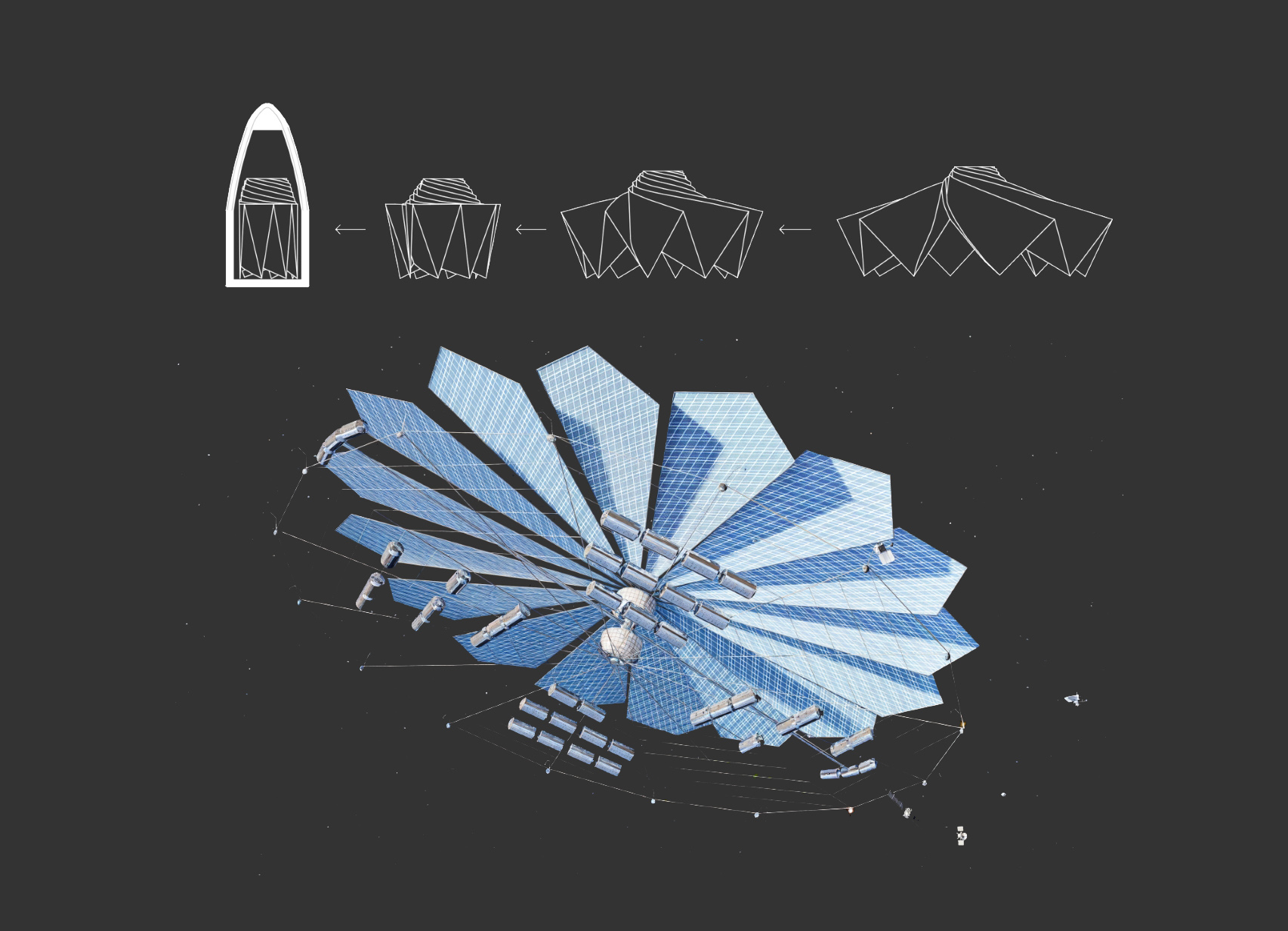
Design Studio S25
State of the Art:
Currently, the International Space Station (ISS) and Tiangong Space Station (TSS) are the two operational space stations in orbit, supporting scientific research and long-term human habitation. A luanr orbiting space station, the Lunar Gateway, is beeing built to support NASA‘s Artemis missions. Additionally, plans for human missions to Mars are on the table.
In addition to scientific opportunities, several commercial space station concepts are currently being developed:
Orbital Reef – a joint project by Blue Origin and Sierra Space, designed as a ‚mixed-use space business park‘ with modular architecture for commercial and scientific activities.
Starlab – developed by Nanoracks, Voyager Space, and Lockheed Martin. Starlab is planned as an advanved research station.
Haven 1 – Vast, a space startup, aims to launch a small commercial space station designed for up to four occupants, serving both commercial and scientific purposes.
Airbus and Voyager Space – inted to develop a European research platform in space.
Studio Approach:
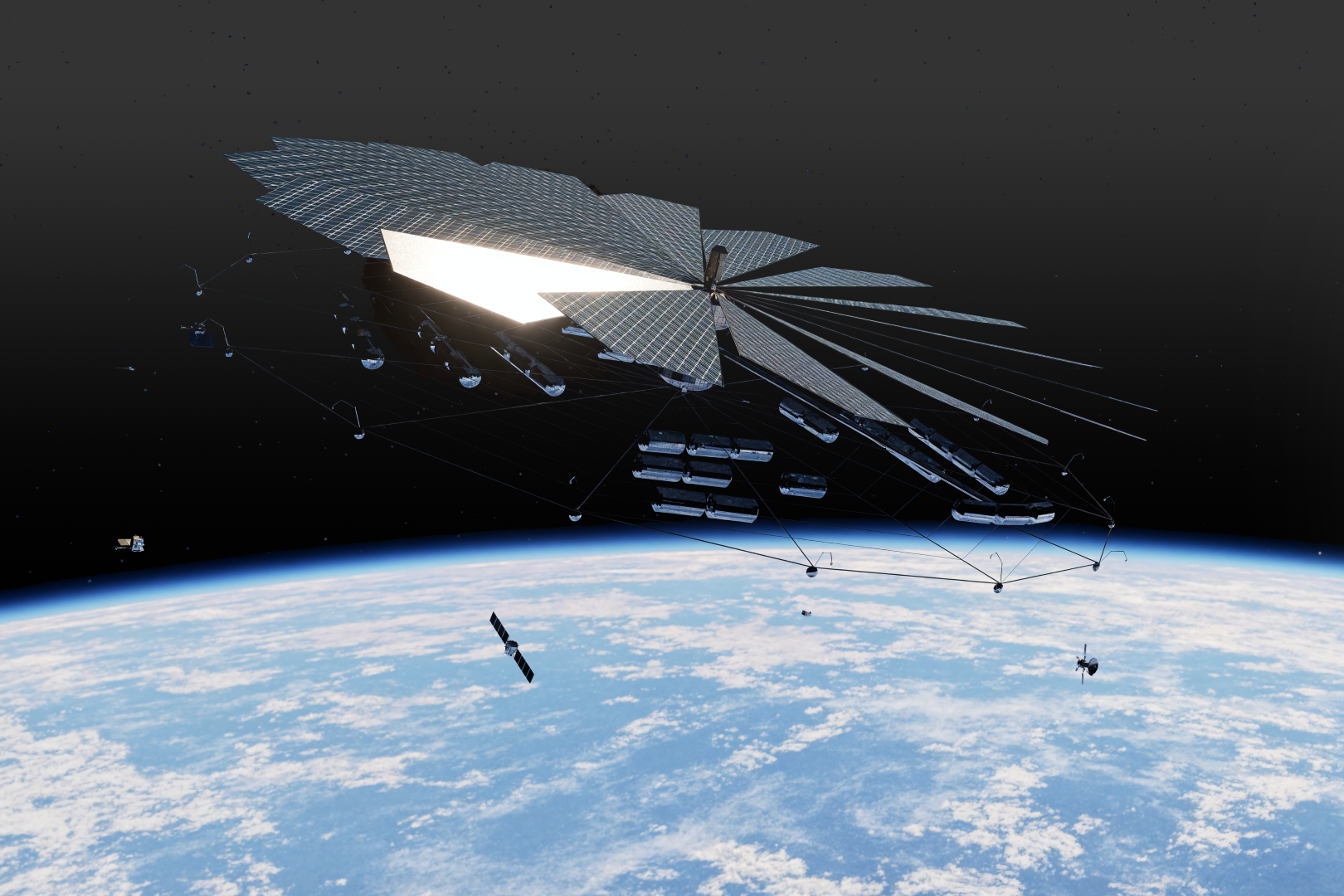
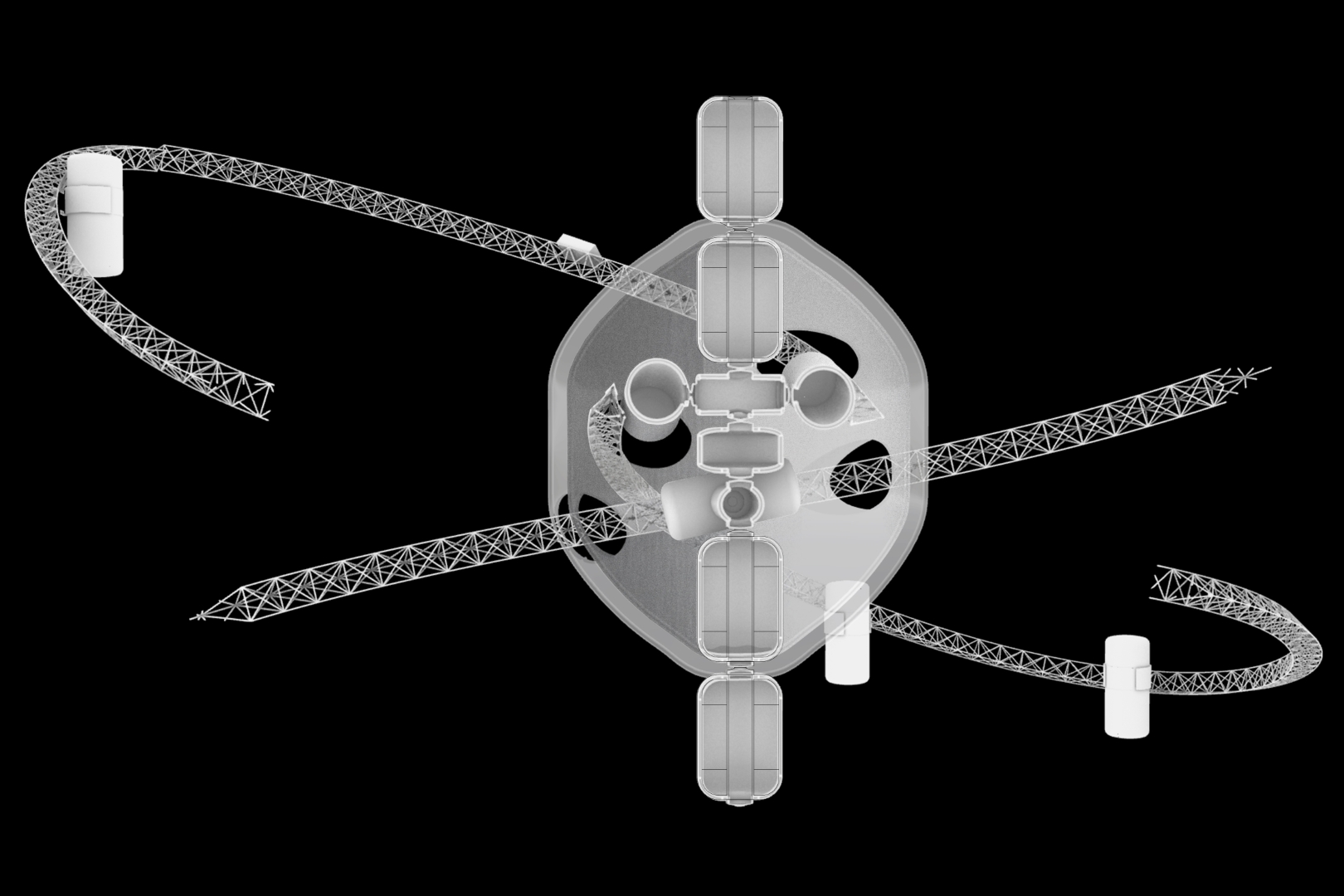
The design of this project is based on the specifications and dimensions provided in the SpaceX STARSHIP Users Guide[1]. This design studio challenged students to conceptualize a next-generation space station serving as a testbed for future developments in space architecture.
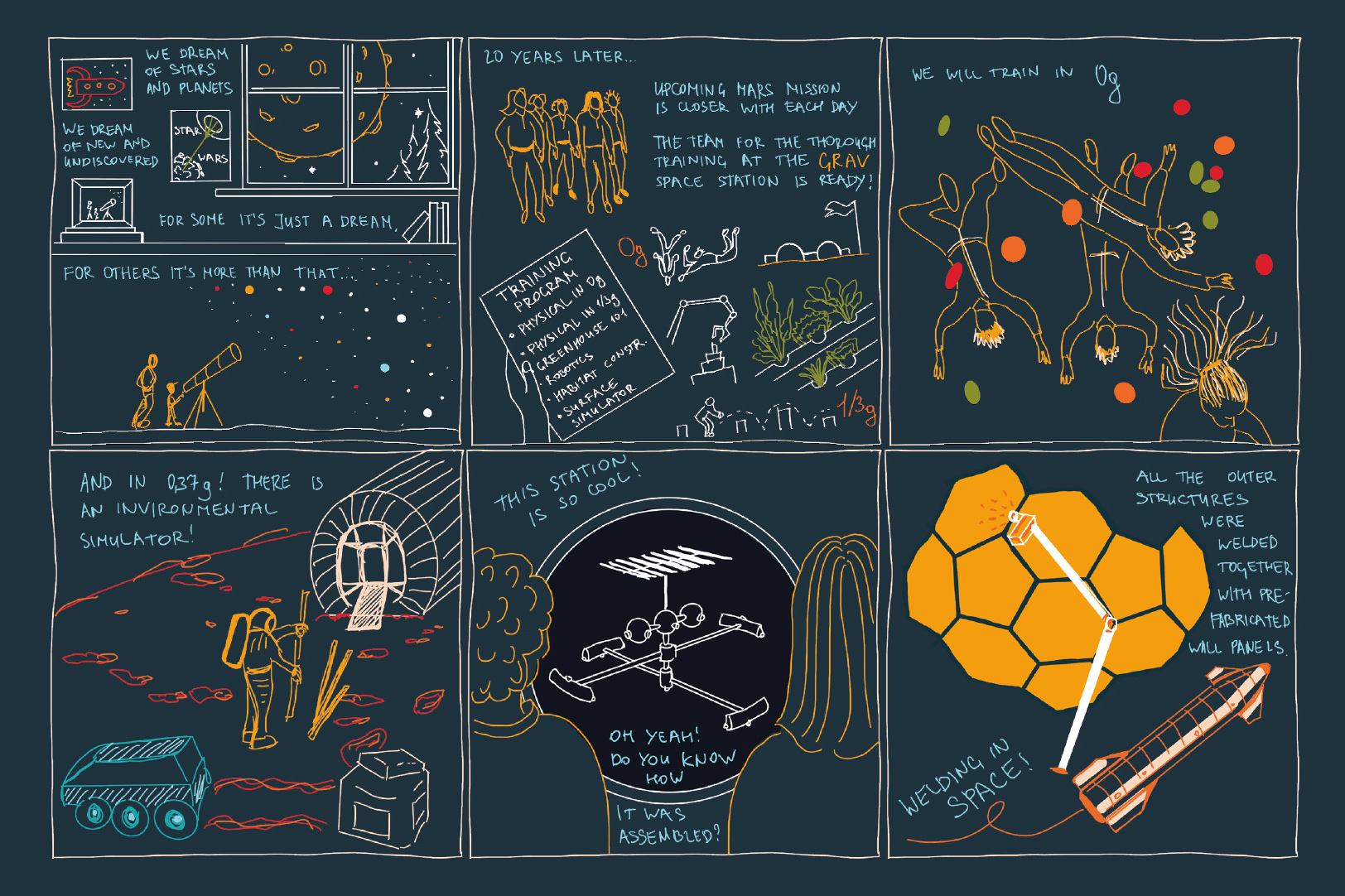
Such a testbed was considered essential, as many critical aspects of space habitation remain uncertain — including the effects of varying gravity conditions on human health and technology, strategies for constructing large-scale structures in orbit, and the development of sustainable and adaptable infrastructure for long-term missions.
The envisioned facility was therefore required to:
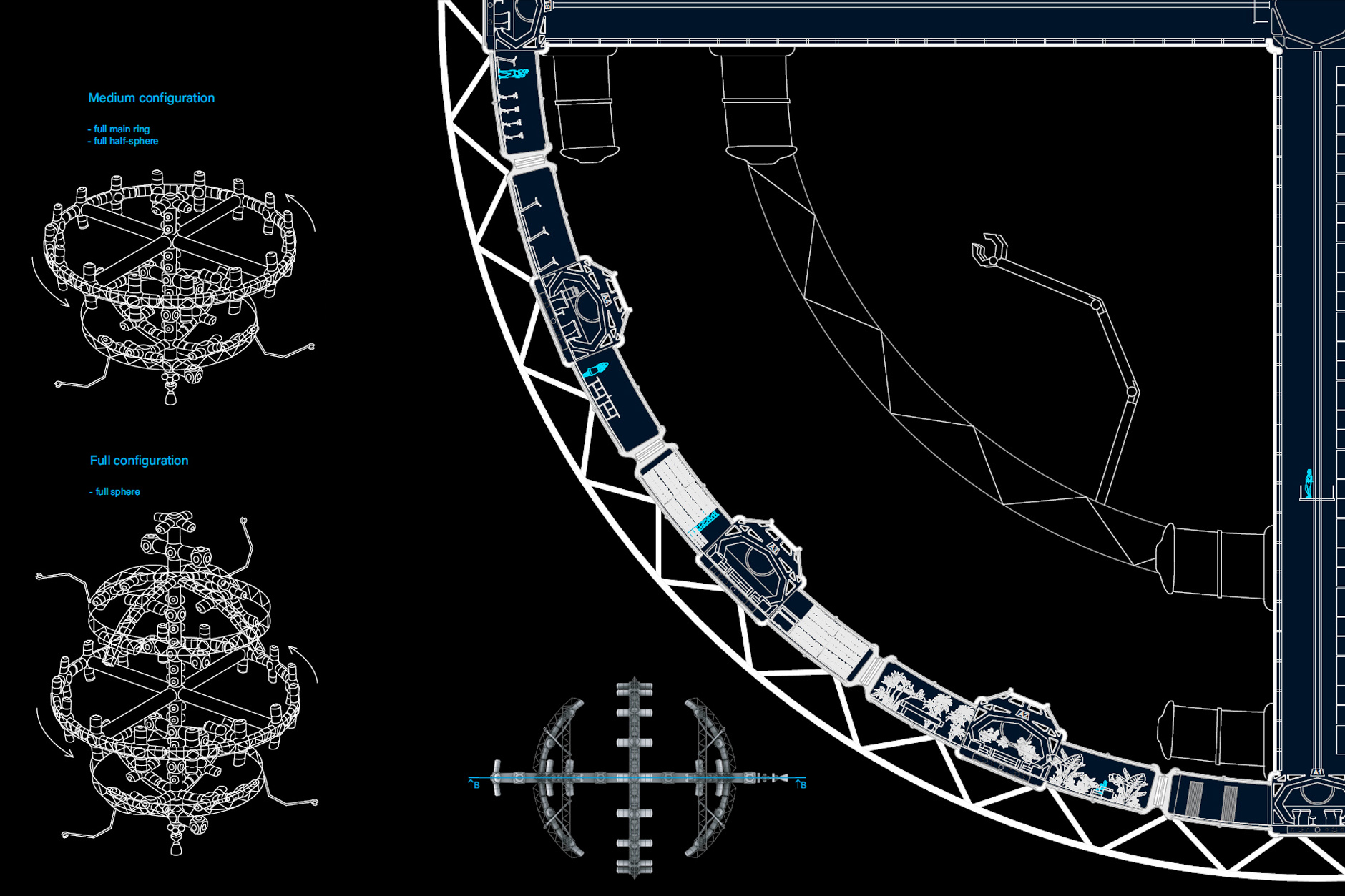
Incorporate different gravity environments — microgravity (LEO), lunar gravity, and Martian gravity — exploring how architectural solutions adapt to these varying conditions. Integrate diverse functions by supporting both commercial activities and scientific research, ensuring the station functioned as a versatile, multi-use facility. Develop construction concepts for assembling a large-scale space station in orbit, addressing challenges related to modular assembly, robotic construction, reconfigurability, and long-term scalability.
The course combined desk critiques, intensive workshop sessions, and expert lectures to support an iterative and research-driven design process. Students received regular feedback, engaged in hands-on problem-solving, and gained insights from professionals in both industry and academia.
[1] SpaceX STARSHIP Users Guide, Revision 1.0, March 2020. © Space Exploration Technologies Corp.
CONTRIBUTORS:
Teaching Team: Dr.-Ing. Sandra Häuplik-Meusburger, Prof. David Nixon, A.o. Univ.-Prof. Dr. techn. Dipl.-Ing. Mag.rer.nat. Peter Schattschneider
Students: Julia Ahm, Beliz Bayraktar, Andreas Benedikt, Florencia Maria Cámara, Deniz Cetin, Jiatan Chen, Christopher Egg, Ala Elbizanti, Mara-Leonie Felber, Baris Gör, Benedikt Haab, Anastasiia Hapanovych, Kathrin Horvath, Sarah Huber, Yana Hurovych, Dijana Imsirovic, Hares Jamali, Margaryta Kaliberda, Benjamin Matijasevic, Annika Julia Nörenberg, Luka Pejic, Sara R, Tobias Strobel, Blake Max Thomas, Karagozaiym Turganbek, Xinyao Yang
Guests, Lecturers & Reviewers: Brand Griffin, Marina Konstantatou, Ted Hall, David Schuman,
Carmen Possnig, Dietmar Feichtinger, Bernard H. Foing, Roxana Balasz
Booklet ORBITAL SHIFT: Adaptive Architecture in Space | read online
Print Version: ISBN 978-3-9519864-4-9