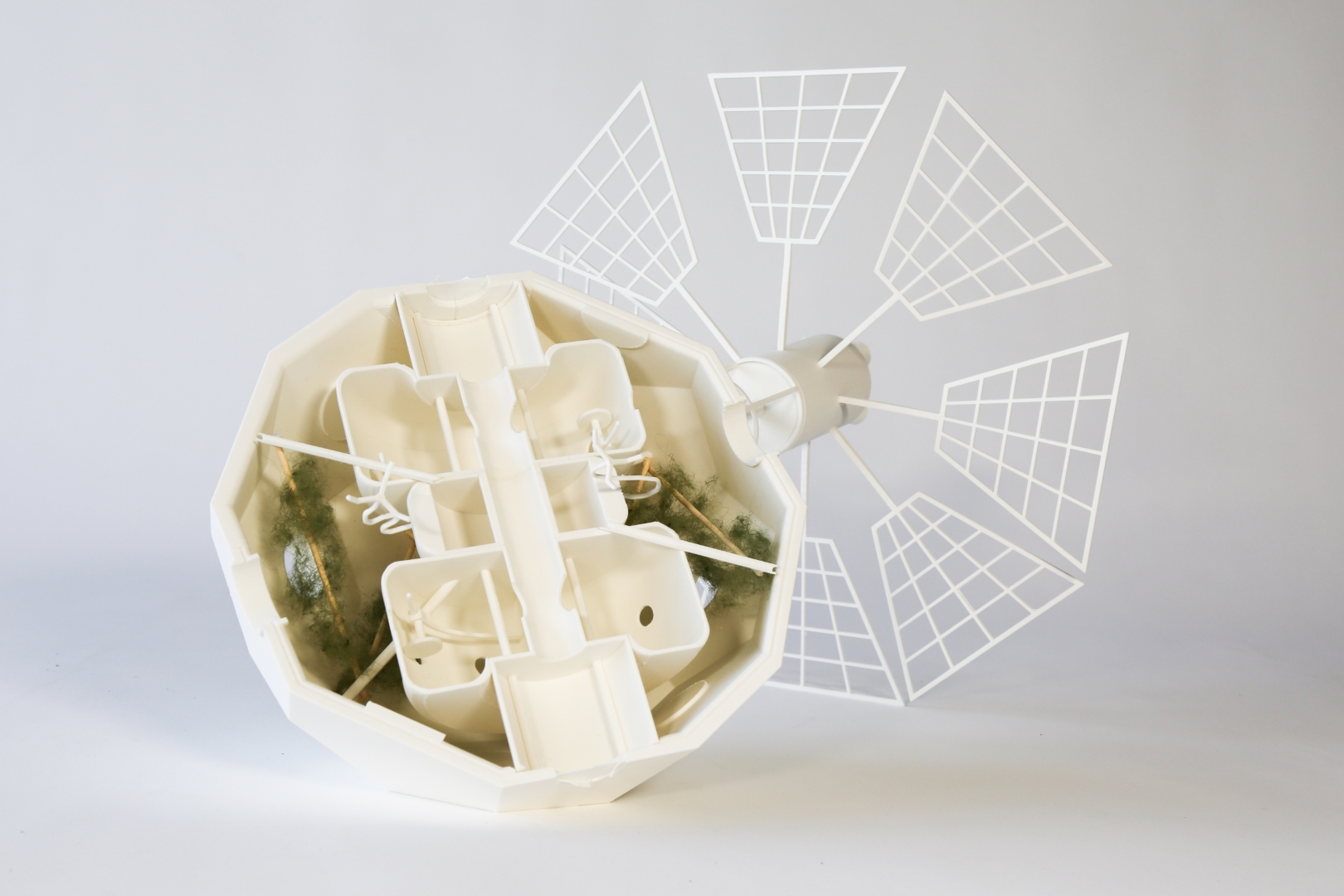
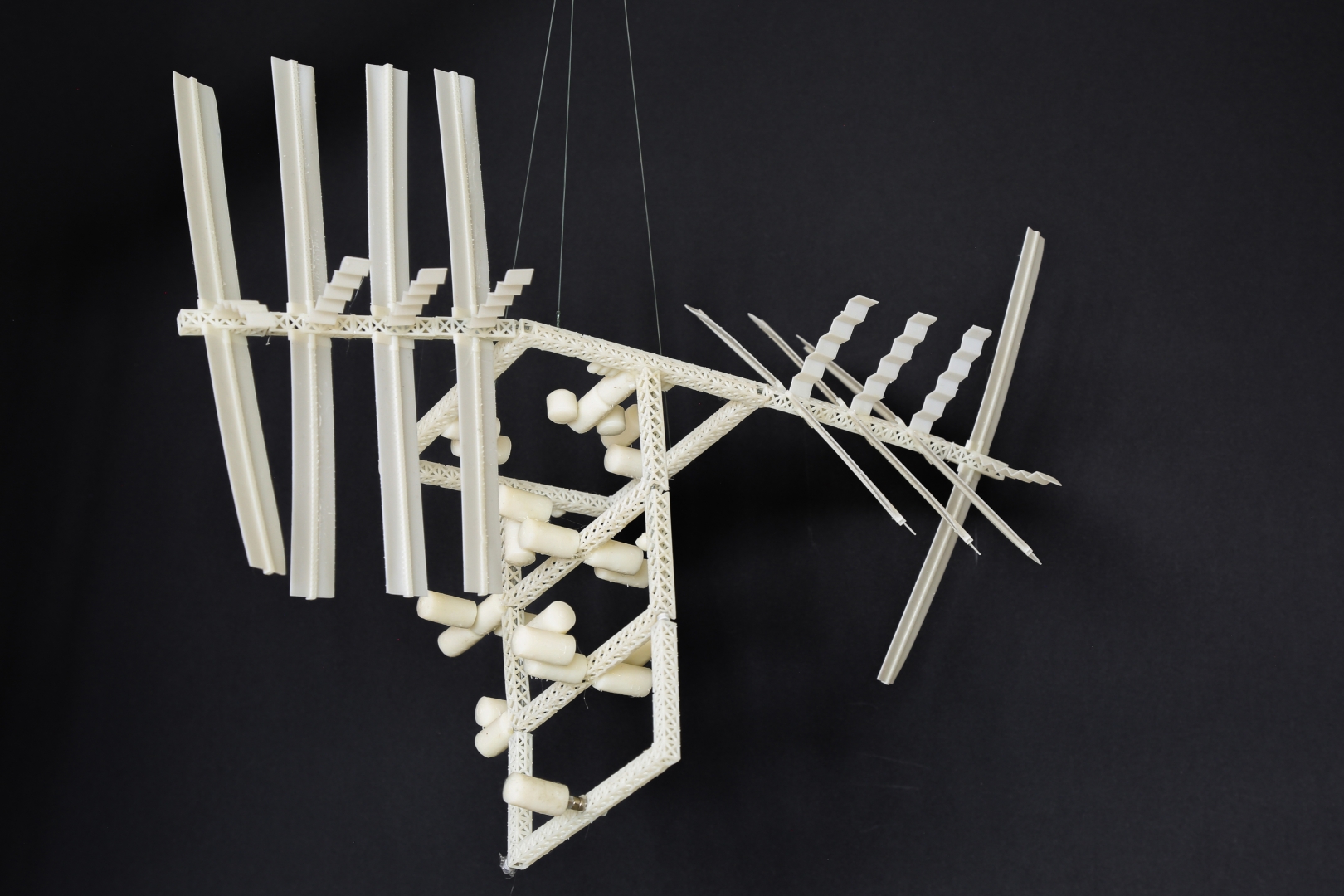
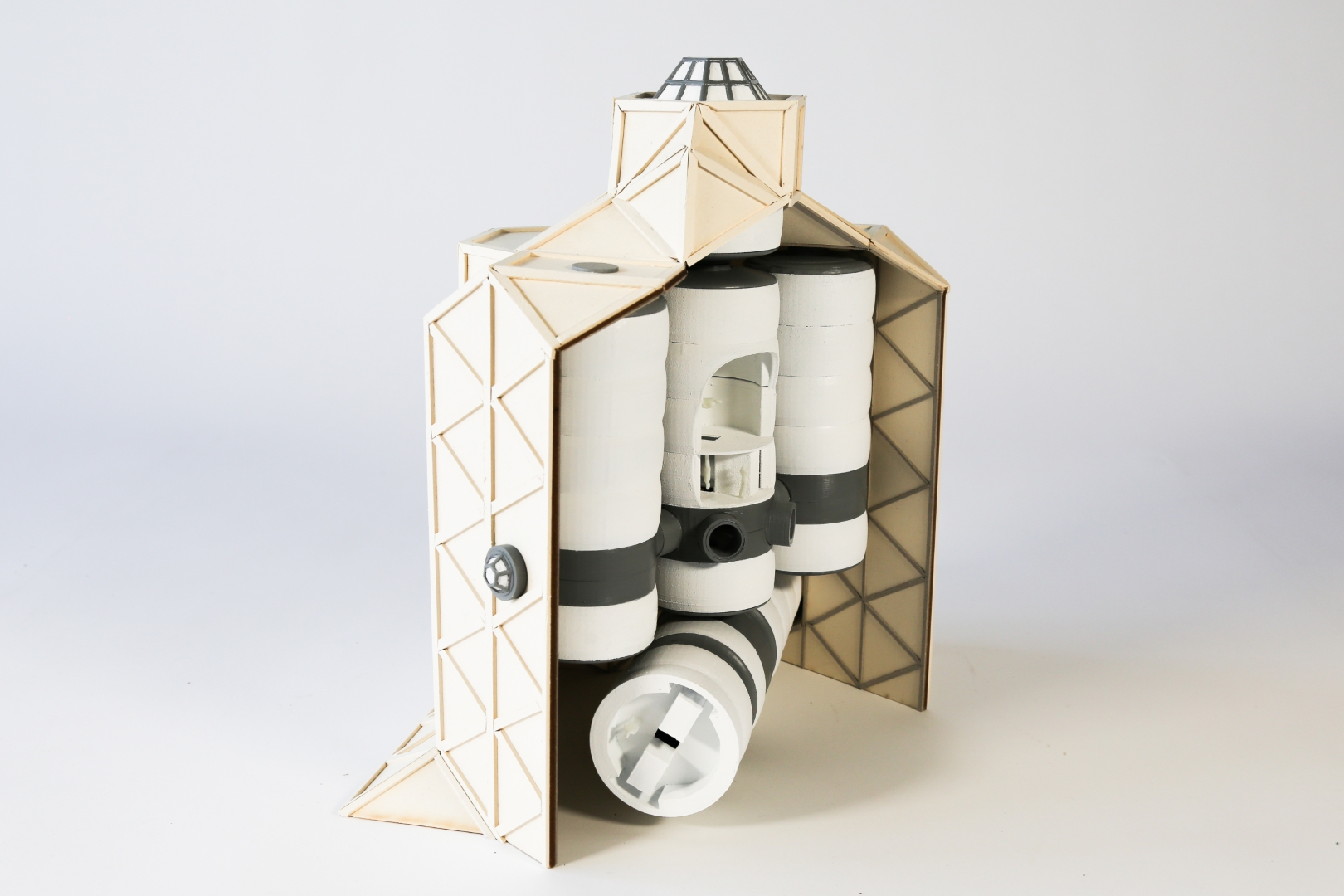
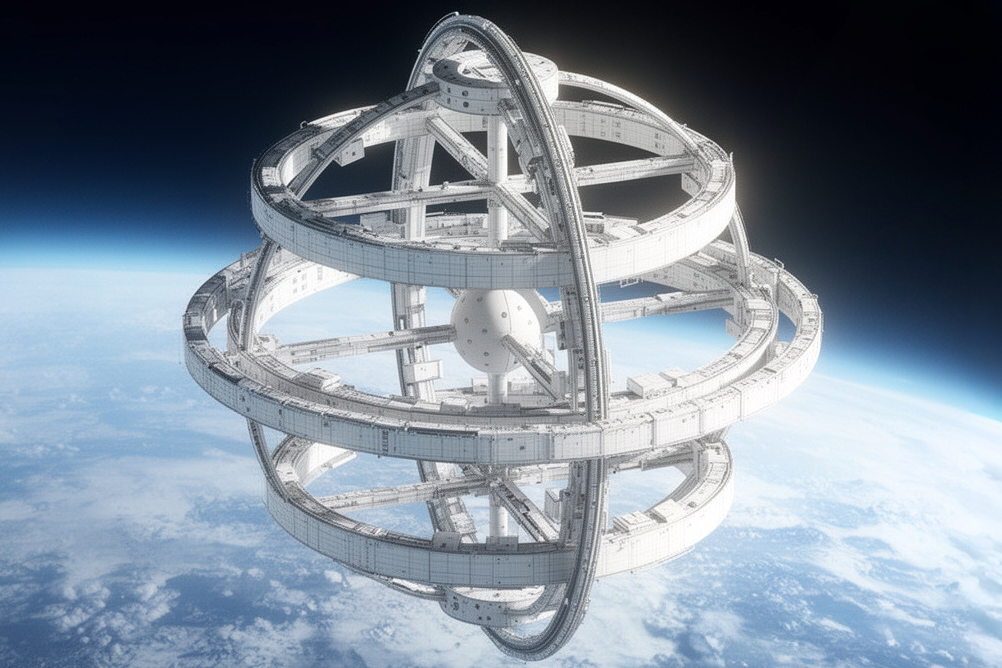
The studio ran alongside a European Space Agency–funded research project and was supported by guest lecturers from ESA, Satellite Applications Catapult, Foster + Partners, TU Munich and David Nixon, among others.
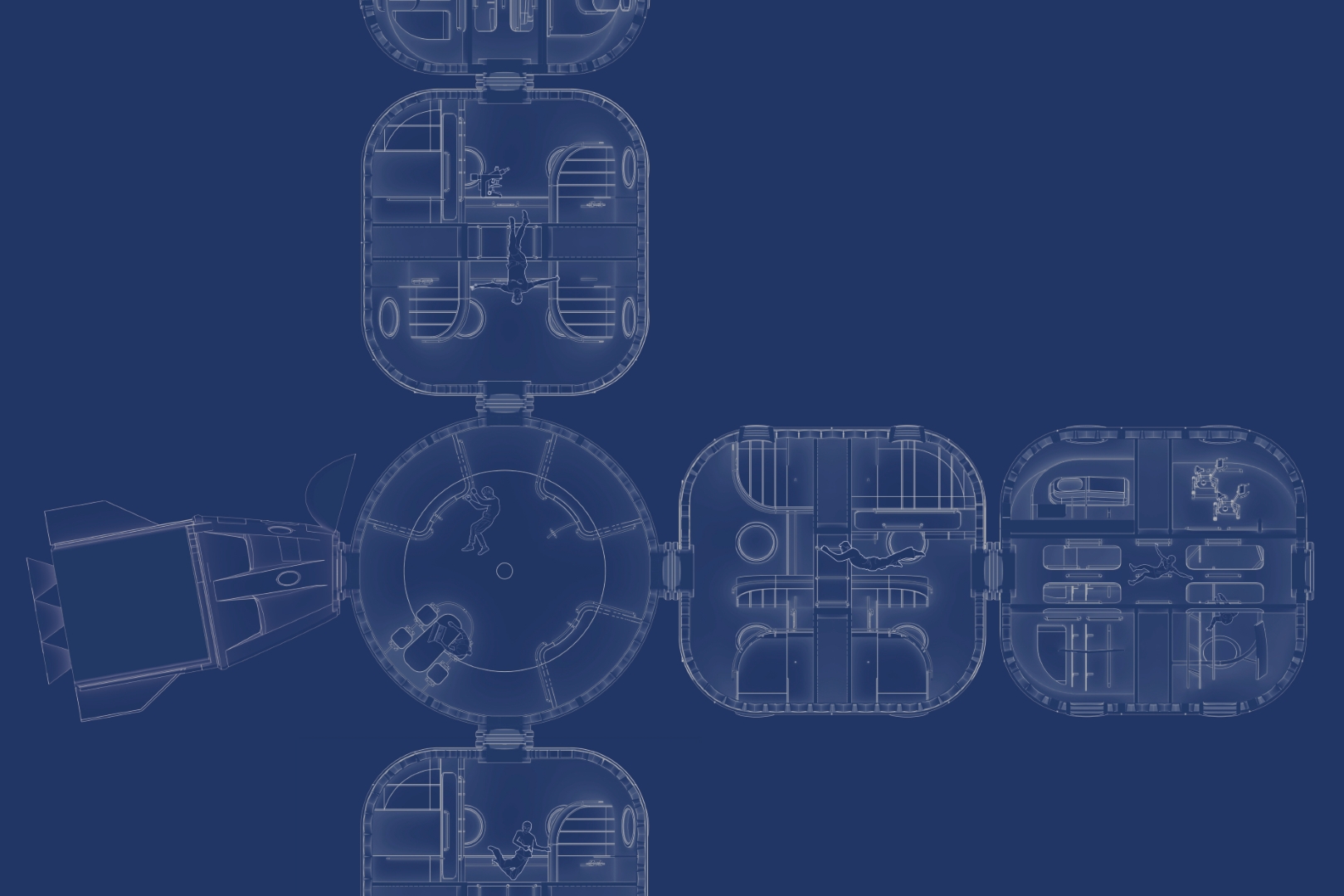
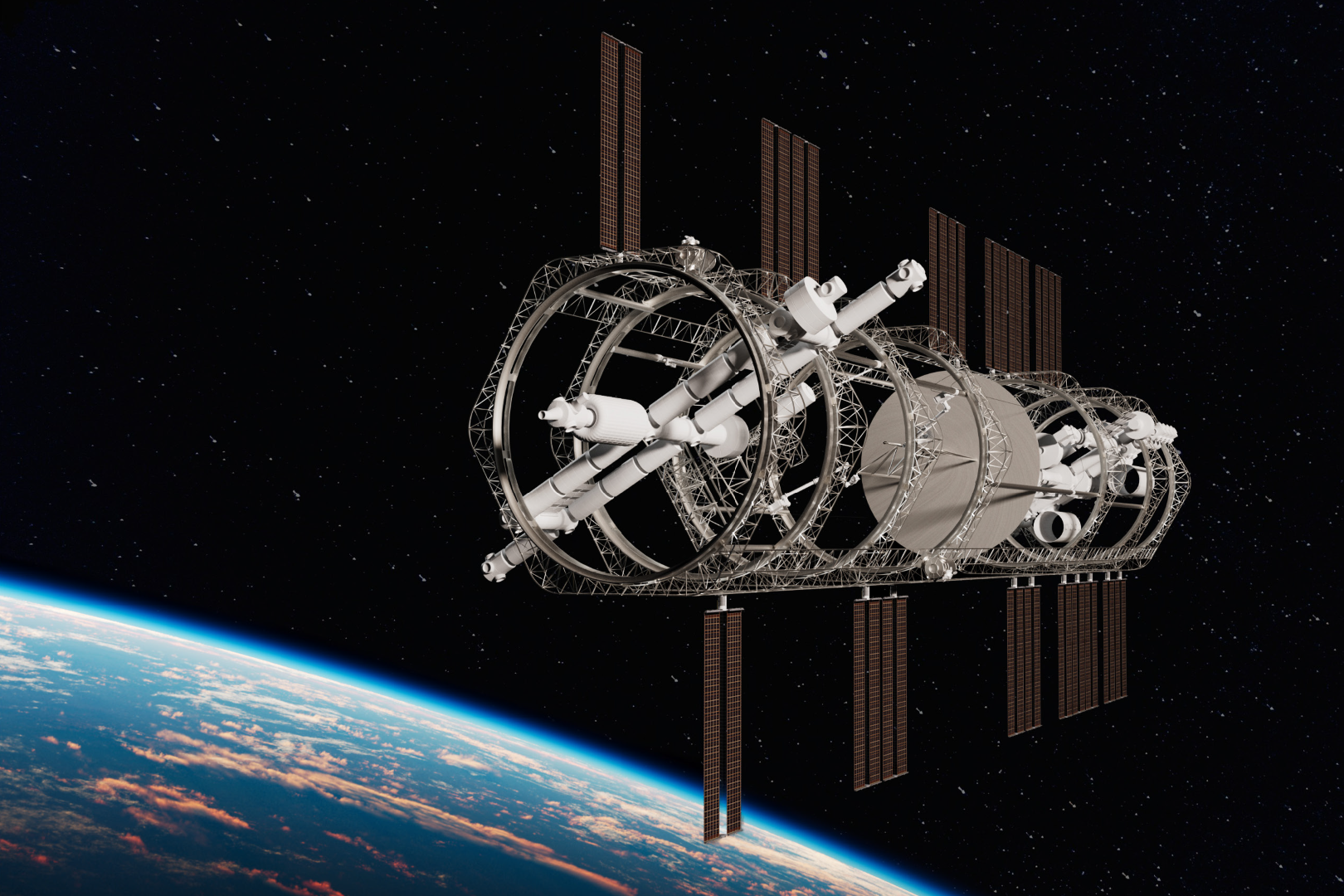
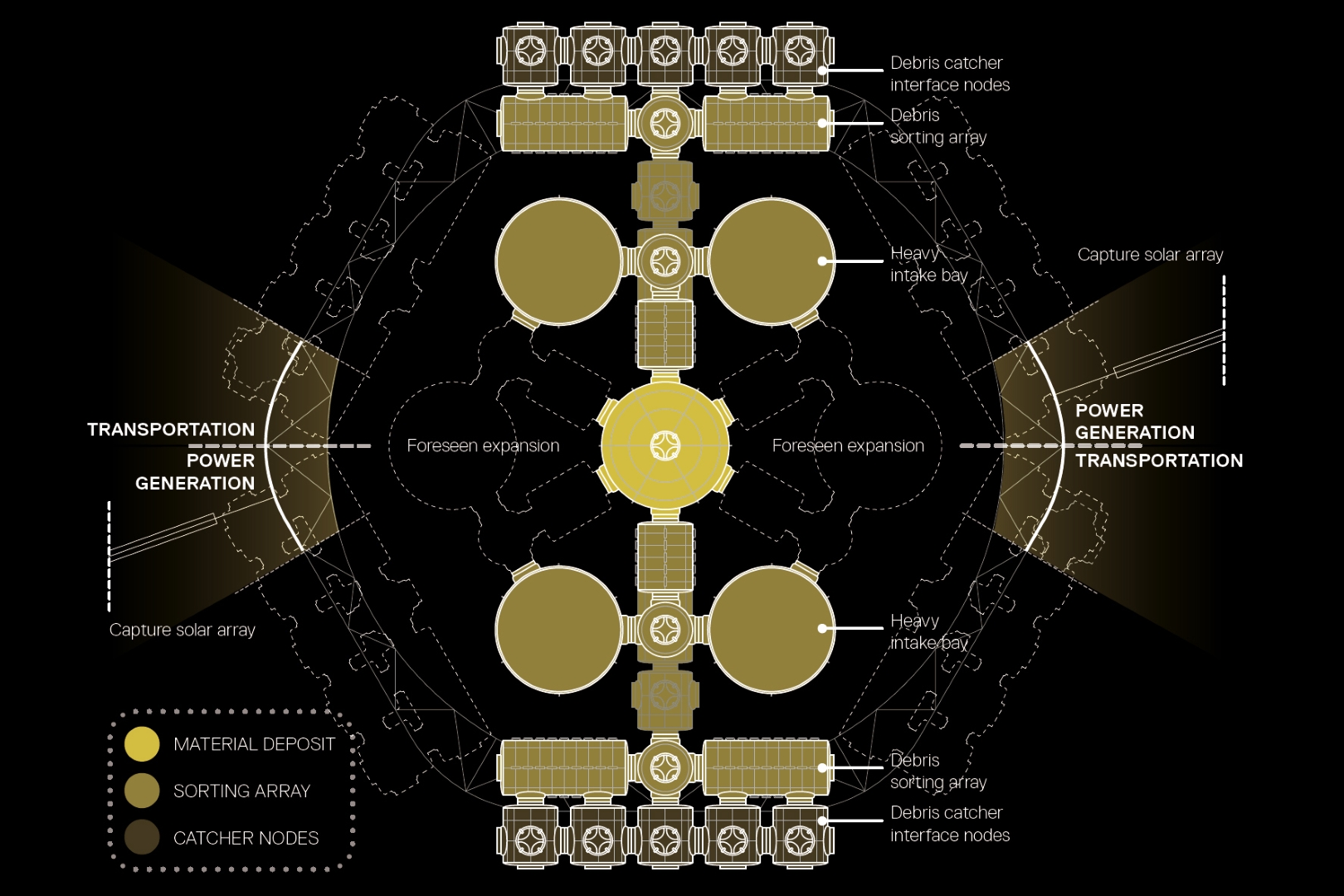
In this design studio, students explored the future of large-scale orbital space structures, moving beyond existing reference solutions toward next-generation space architecture. The central question was: How could large space structures be designed as modular, expandable, adaptable, and sustainable systems that could be assembled and operated in orbit?
At the time, Large Space Structures faced significant challenges, including launcher size constraints, construction and assembly complexity, end-of-life issues and space debris, as well as limited scalability and long-term adaptability. The studio therefore investigated the principle of Design for Assembly and Disassembly, translating strategies from terrestrial modular architecture into the space environment. Following an intensive research and input phase, students worked in teams to develop visionary yet physically grounded architectural scenarios and applications. The aim was to think beyond existing precedents while remaining realistic in terms of physics and system logic.
Key areas of exploration included:
Students:
Roman Bitzinger, Jona Edtmair, Paul Hegewald, Gregor Hilpert, Markus Hintermeier, Anastasiia Kubankova, Meza Kuzhanova, Aleksandar Kyuvliev, Caroline Maria Lechner, Nadezhda Mileva, Matteo Mogliazza, Amna Okanovic, Luka Pejic, Clara Seifert, Franziska Thiemeyer, Malden Tzvetkova, Carolina Wannasek
Supervisors:
DI Dr.-Ing. Sandra Häuplik-Meusburger & field experts:
European Space Agency (ESA), Satellite Applications Catapult (Alexander Goodhand, Yashas Kumar), Foster + Partners (Marina Konstantatou, Aran Sena), Technical University of Munich (Pierluigi D’Acunto, Bhavatarini Kumaravel), David Nixon, and invited international experts from the fields of space architecture, aerospace engineering, and orbital infrastructure.